When an Object Stops Keeping Time
Sometimes an object stops being useful in the way it was made to be useful. That doesn’t mean it’s finished.
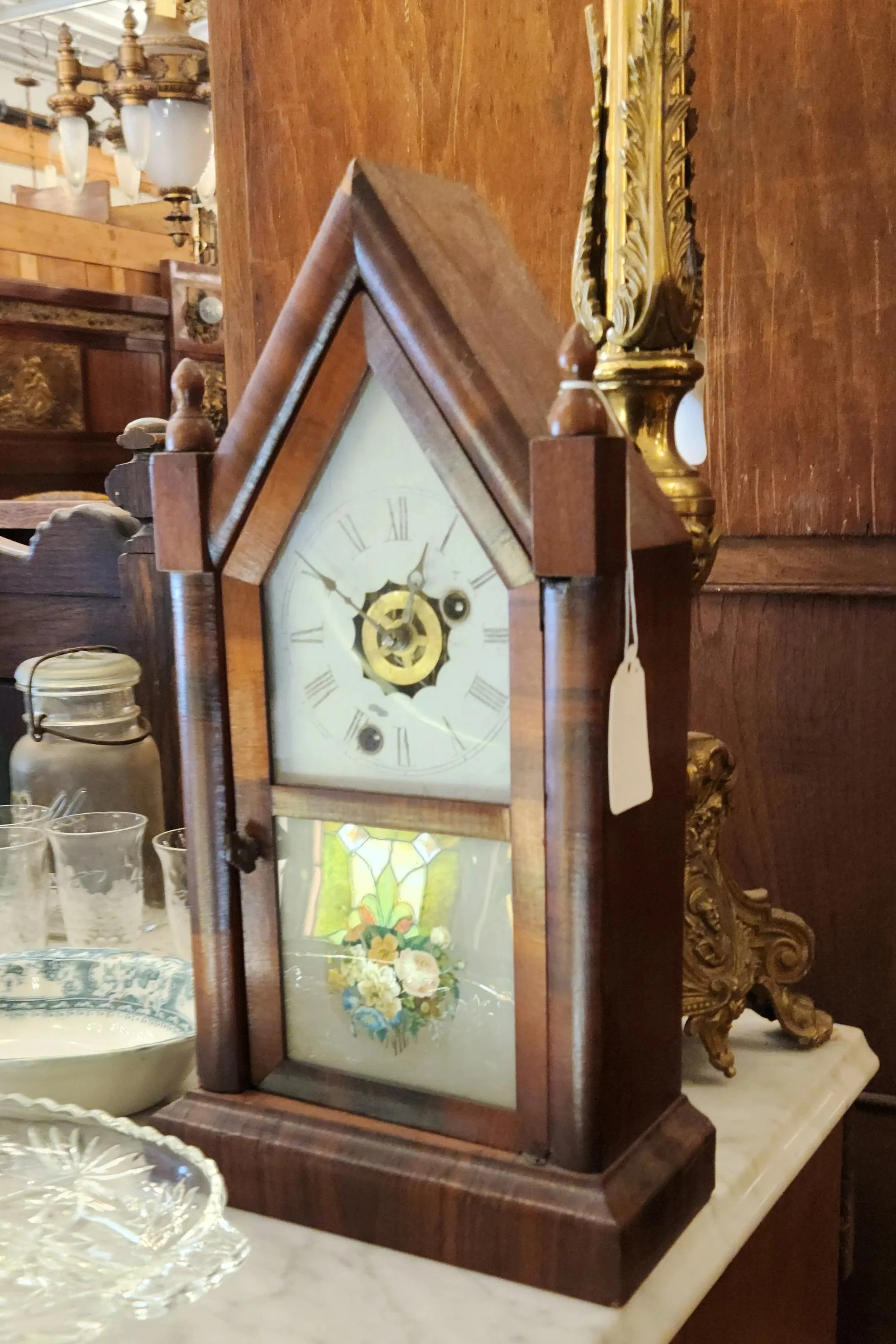
I saw this old clock and immediately stopped seeing it as a clock.
Someone else may have seen a decorative antique, a repair project, a relic from another room in another life. Someone else may have noticed the price tag, the missing function, the scratches in the wood, or the fact that it no longer fits the way we live now.
I saw a small house.
A stage.
A possible container for a future assemblage.
That is one of my favorite parts of working with found objects: the moment when a thing slips free from its original purpose. A clock does not have to keep time forever. A drawer does not have to remain in a cabinet. A box does not have to hold what it once held. A broken frame, a cabinet door, a tin, a hinge, a handle, a scrap of metal — all of them can become openings into something else.
Sometimes an object stops being useful in the way it was made to be useful. That doesn’t mean it is finished. It may only mean it is ready to become something different.
I think this is why antique stores, thrift shops, estate sales, and forgotten corners are so alive to me. They are full of objects waiting to be reinterpreted. Not rescued exactly. Not improved. Just seen again.
Ten people can look at the same item and see ten entirely different futures. One person sees clutter. One sees nostalgia. One sees value. One sees repair. One sees trash. One sees décor. One sees memory. One sees burden. One sees history.
And then there is the artist, who asks:
What else could this be?
That question is often where my work begins.
The object does not have to become what I first imagine. It only has to make me pause, tilt my head, and consider the possibility that its first life was not its only life.
Maybe that is what I love most about working with found materials. They already carry time, use, touch, failure, beauty, and evidence. They arrive with a past, but not necessarily with a conclusion.
The clock may no longer keep time.
But it can still hold a story.