Why Assemblage Artists See Antique Shows Differently
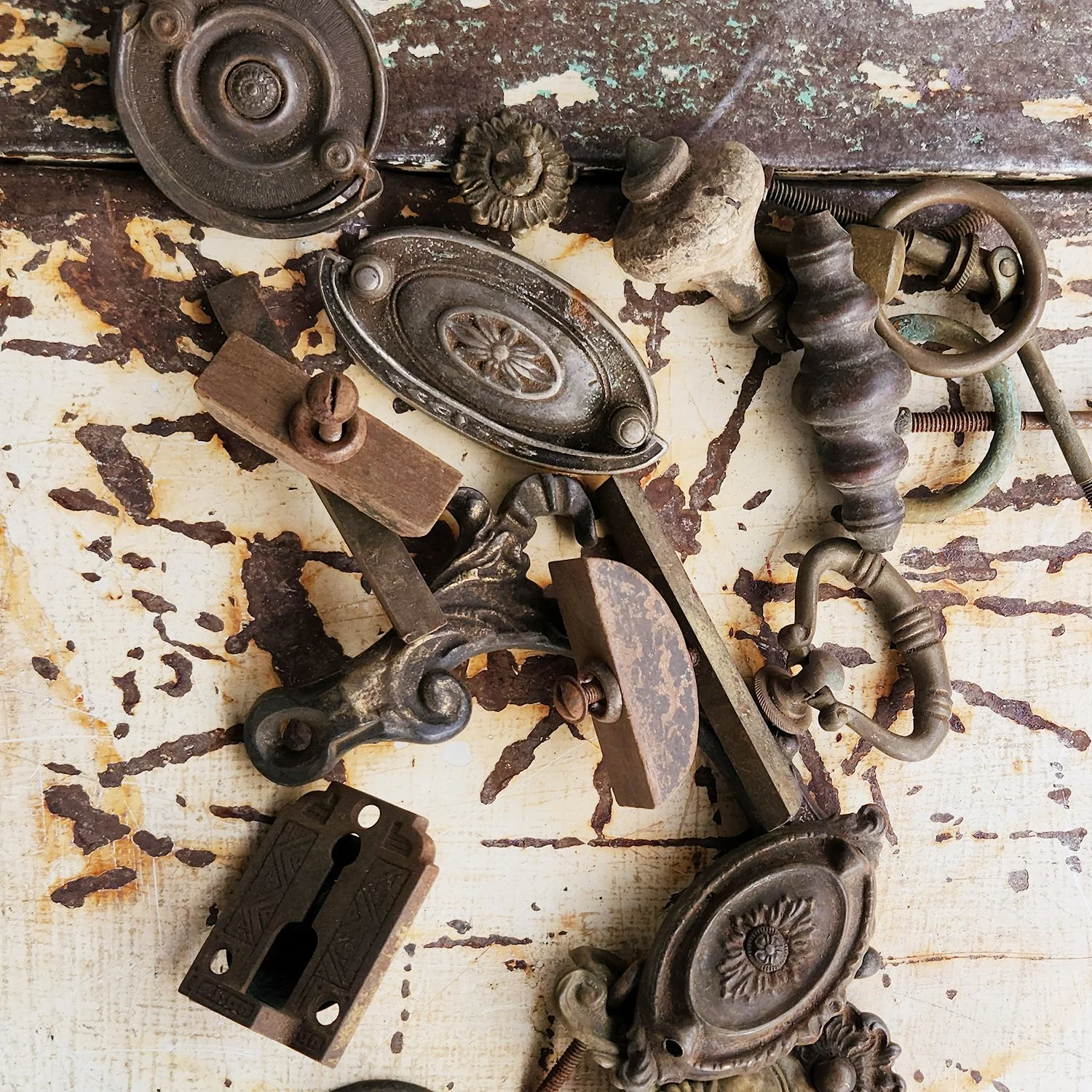
A handful of beautifully aged hardware that will be finding new lives as artful elements
Walking through the Springfield Antique Extravaganza, I was reminded that assemblage artists don't really shop the way other people shop. While many visitors are searching for an item to complete their collection, the perfect piece of furniture, or a specific treasure, I'm usually drawn to the things that have been separated from their original purpose. A single rusted key. A weathered game piece. An old photograph tucked into a box of forgotten papers. The objects that catch my eye are rarely valuable in the traditional sense, but they carry something harder to define: evidence of a life lived.
An antique show feels less like a marketplace and more like an archive of experiences lived. Every worn handle, faded letter, and chipped trinket bears the marks of time and use. As an assemblage artist, I'm not simply collecting objects; I'm collecting potential. I'm listening for stories that haven't quite finished being told. Often, I don't know exactly how an object will find its way into my work. I only know that it draws me and tells me that it has more to say.
That may be what I love most about these shows. They remind me that beauty isn't always found in the pristine or polished. Many times I'll find it in the overlooked, the discarded, and the things that have outlived their original purpose. Assemblage art begins with seeing potential where others see remnants, and places like Springfield are full of those quiet opportunities waiting to be noticed.