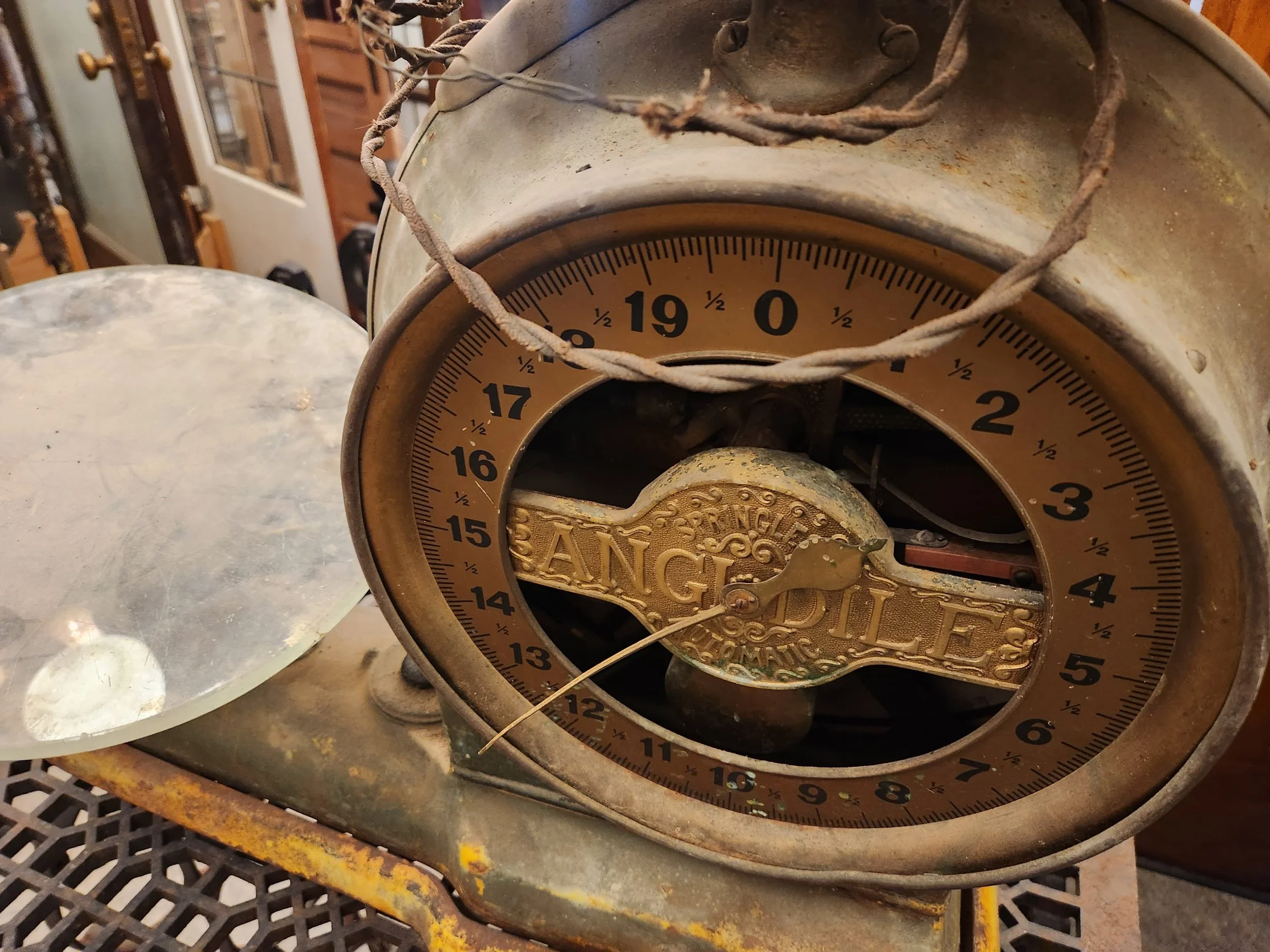
A vintage Hanson Model 2060 kitchen scale, likely produced in the 1940s or 1950s. The people who once relied on it are unknown to me, but the scale remains.
I found myself wondering this recently while standing in an antique market.
The object itself wasn't particularly remarkable. It wasn't valuable. It wasn't rare. In fact, most people walking past it probably wouldn't have given it a second glance.
But someone kept it.
Not for a year. Not for a decade.
For generations.
At some point, someone made the decision not to throw it away. Then someone else did the same. And perhaps another after that. Through moves, marriages, children, deaths, changing fashions, and changing times, the object remained.
Why?
What made it worthy of space on a shelf, in a drawer, or tucked carefully into a box?
I think about this often when I search through old things. Antique markets and flea markets have become places of endless curiosity for me, not because of what I might buy, but because of the stories objects seem to carry. (If you're curious, I've written more about why assemblage artists see antique shows differently.)
A worn key. A faded photograph. A tarnished brooch. A handwritten note. The objects themselves tell only part of the story. What fascinates me is the unseen chain of people who decided they mattered.
Perhaps the object marked a special day. Perhaps it belonged to someone deeply loved. Or perhaps its meaning was eventually forgotten, while the instinct to keep it remained.
Not everything survives.
Most things disappear.
The objects that find their way into antique stores and flea markets are the exceptions. They have somehow escaped countless opportunities to be discarded. They have outlived the homes they once occupied and often the people who once cherished them.
When I bring an old object into my studio, I'm aware that I am not its first caretaker.
I am simply the next one.
That thought changes the way I look at things. It makes me wonder whether objects carry traces of the people who kept them close. Whether meaning lingers even after names have been forgotten.
Perhaps that's one reason I am drawn to assemblage.
I like the idea that an object's story doesn't end when its original purpose does.
A broken watch can become something else.
A discarded hinge can become something else.
A forgotten photograph can begin a new conversation.
Maybe the question isn't what made someone save an object for one hundred years.
Maybe the more interesting question is what happens next.