Why Assemblage Artists Fall in Love with Things Other People Throw Away
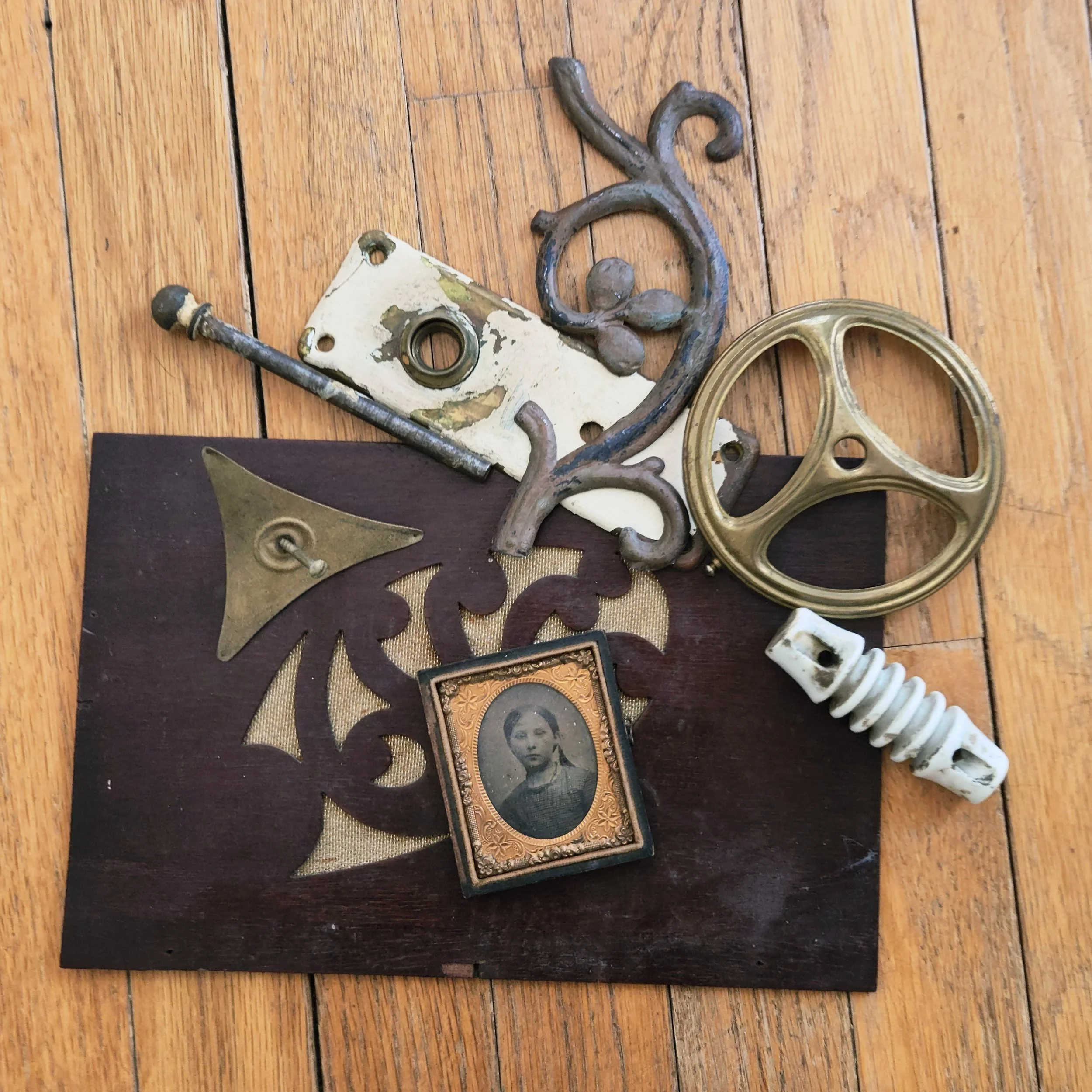
Some people see a pile of old objects. I see stories waiting for the right conversation.
Most people see an old rusted hinge, a broken clock part, or a worn wooden spool and wonder why anyone would keep it.
An assemblage artist sees possibility.
When I walk through an antique market or rummage through a box of discarded objects, I'm rarely looking for something in perfect condition. In fact, it's often the opposite. I'm drawn to things that have lived a life. Objects that show wear. Objects that carry evidence of use, age, and purpose.
A bent key, a faded photograph, a cracked measuring device—these things contain stories. They remind us that time leaves its mark on everything. When incorporated into an assemblage, those marks become part of the artwork itself.
I think that's one reason assemblage art resonates with so many people. The materials are familiar. They come from kitchens, workshops, sewing rooms, attics, and forgotten drawers. Viewers often recognize something from their own past and suddenly find themselves connected to a piece in a deeply personal way.
For me, collecting objects isn't about acquiring things. It's about preserving potential. Every item I bring into my studio is waiting for a conversation with another object. Sometimes that conversation happens quickly. Sometimes it takes years.
What others see as discarded, an assemblage artist often sees as unfinished.